RollerGirl began as a cinematic memory and became an image I wanted to revisit. This #AIart series follows that idea from a painterly night scene into photorealistic skating images, beach sunsets and a playful studio setting. Along the way, the connection to Boogie Nights becomes more deliberate, while the character develops into my own Havoc King interpretation.
All images featured here are AI-generated artworks. This is the story of their development, rather than an account of a real encounter or a photographic shoot.
The First RollerGirl Image
The starting point was Boogie Nights, although I did not initially set out to make a direct adaptation. #RollerGirl had simply stayed with me. Through my interest in adult entertainment and its visual culture, she was a character I kept coming back to. That connection eventually found its way into my artwork.
I would not describe her as a major figure within #footfetish culture. For me, the appeal began with the character and the roller skates. The foot-focused direction came through my own way of looking at the subject.
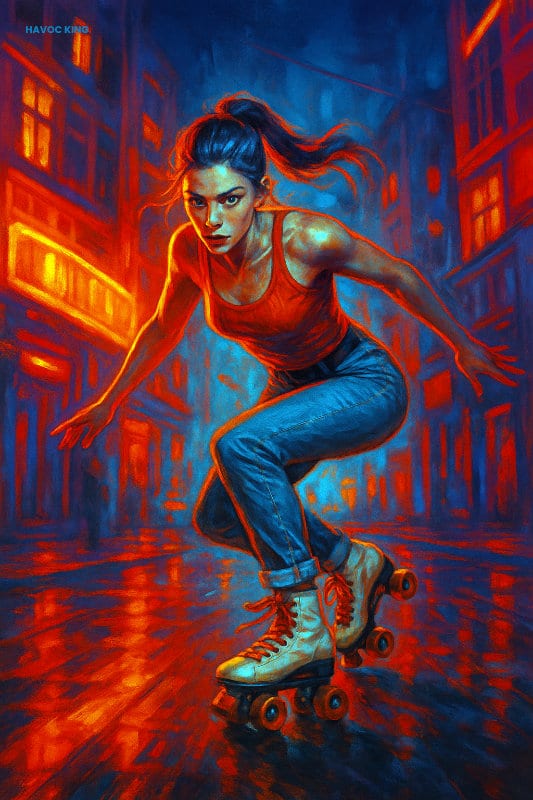
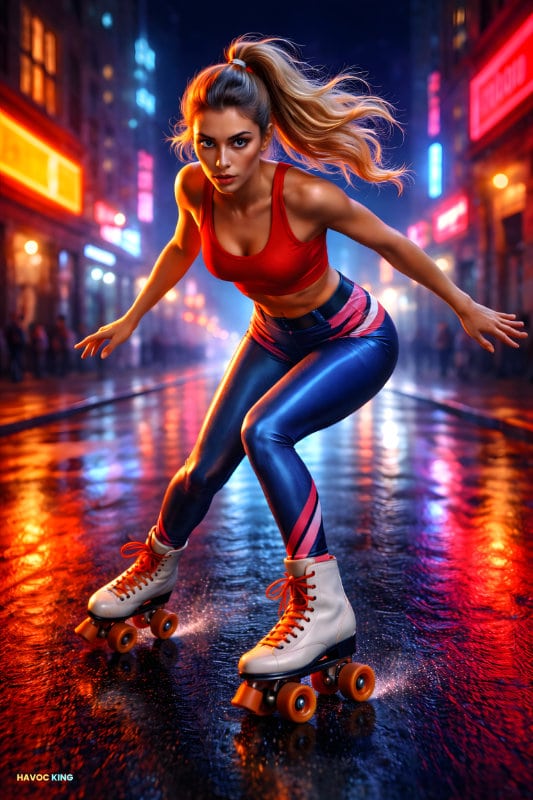
The first image was distinctly painterly. A dark-haired skater leans forward into the frame, surrounded by deep blue shadows and orange light. Her red top, jeans and old-school #skates give the scene its identity. The street almost seems to move around her, with reflections stretching across the pavement.
What interested me was the energy of that pose. She feels active and determined, caught in the middle of something rather than standing still for a portrait. The image already had enough presence to make me wonder what else I could do with her.
Bringing RollerGirl Into Photorealistic AI Art
Once that first picture existed, I wanted to explore a more photorealistic version. I could see the beginnings of a series: the same forward movement, a stronger sense of material and light, and a character who could appear in more than one setting.
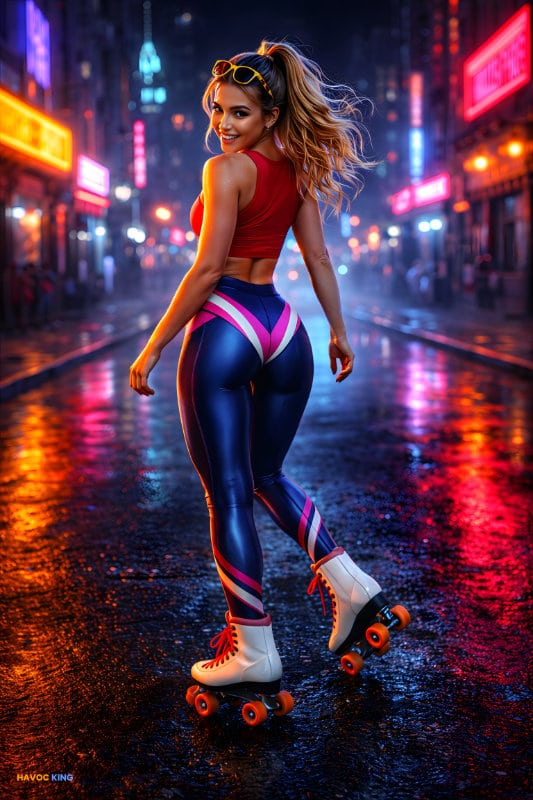
The new interpretation keeps the red top and white quad skates, but changes the styling. Blonde hair tied high, blue #leggings with pink accents and brighter neon reflections give her a different presence. The visual connection to the original remains clear, even though the figure is no longer identical.
Keeping the Energy of the Original
The most useful link between these two images is the pose. Her body leans into the movement, her arms help balance her, and the wheels anchor the picture to the street. That physical relationship gives the transformation something concrete to preserve.
Photorealism also changes what I expect from an image. Painted light can suggest a surface with a few strokes. A more photographic treatment invites closer attention to the skates, the fabric and the way the figure occupies the space. Those details have to support the action if the scene is going to feel convincing.
This became the basis for developing RollerGirl in the style of my Havoc King artwork on DeviantArt. The original supplied the impulse; the new version gave me a character to build around.
From Neon Streets to the Beach
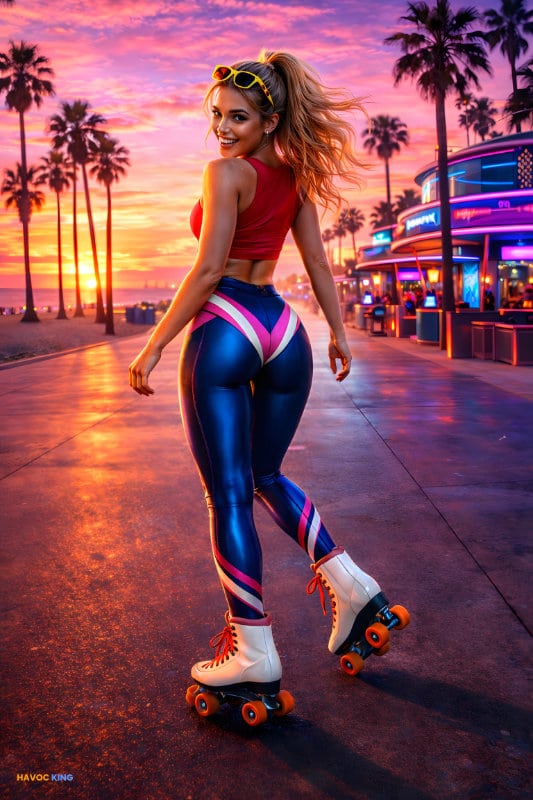
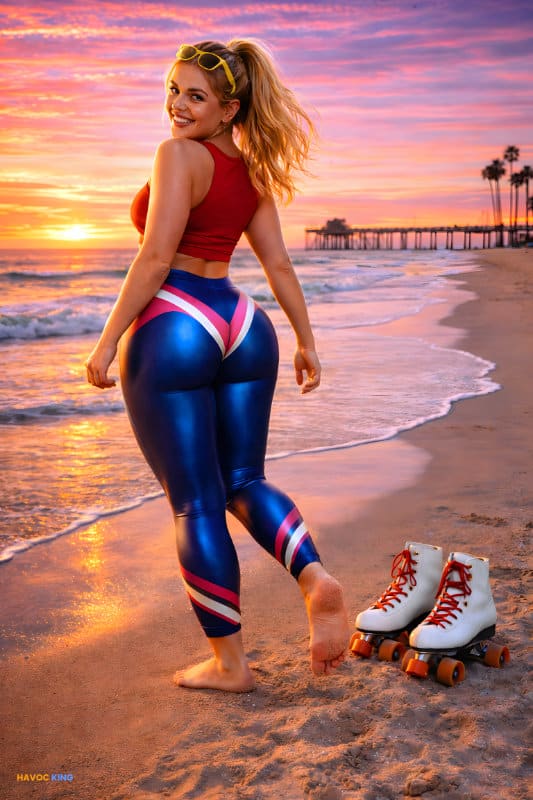
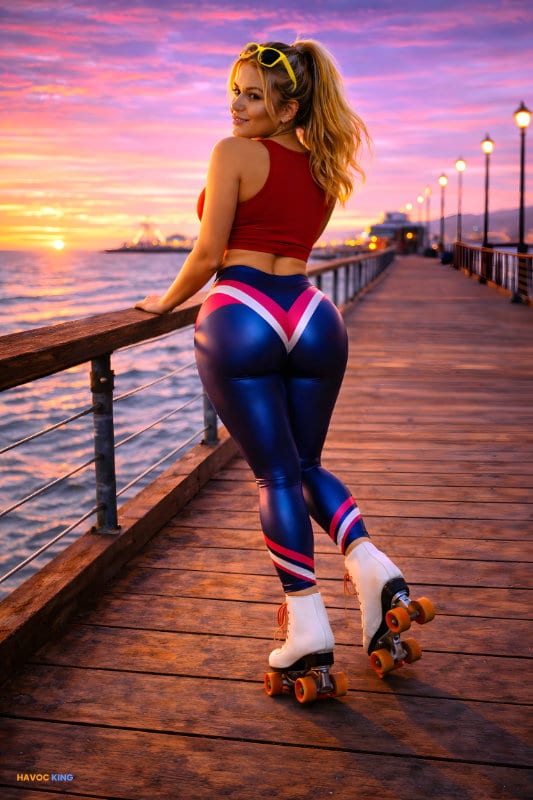
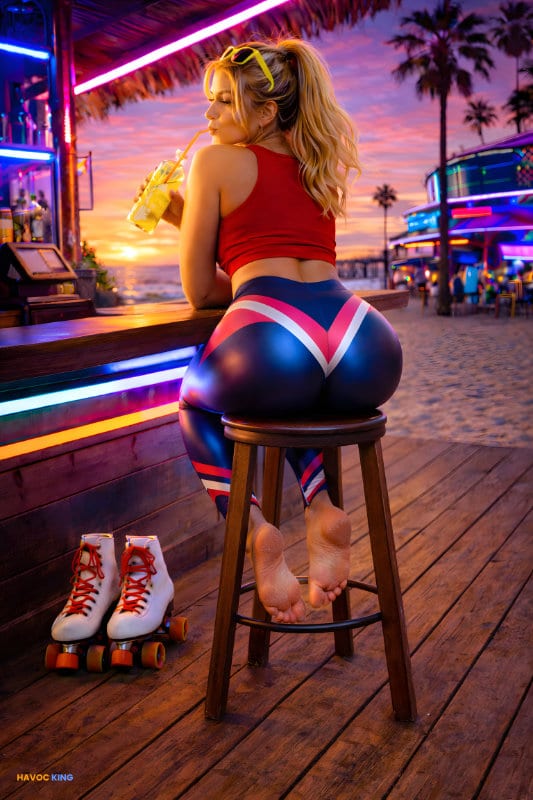
Moving RollerGirl towards the beach opened up another side of the series. The red top, blue #leggings and retro skates still make her recognizable, but the setting changes the pace. Palm trees, a promenade and pink evening light create room for a more relaxed moment.
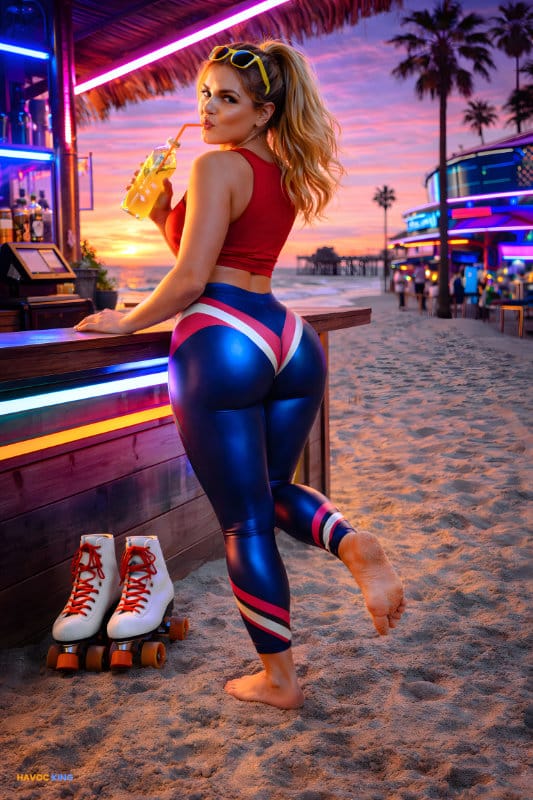
The standing and skating views are useful here because they show her within the environment. A beachbar or a stretch of boardwalk gives the viewer somewhere to place the character before the closer images begin. The series gains a sense of space, rather than moving straight from one posed detail to another.
I see these pictures as variations within the same imagined world. They suggest a route from the promenade towards the water, without requiring every image to document a precise sequence of events. The continuity comes from the styling, the light and the character herself.
A Pause With the Skates Off
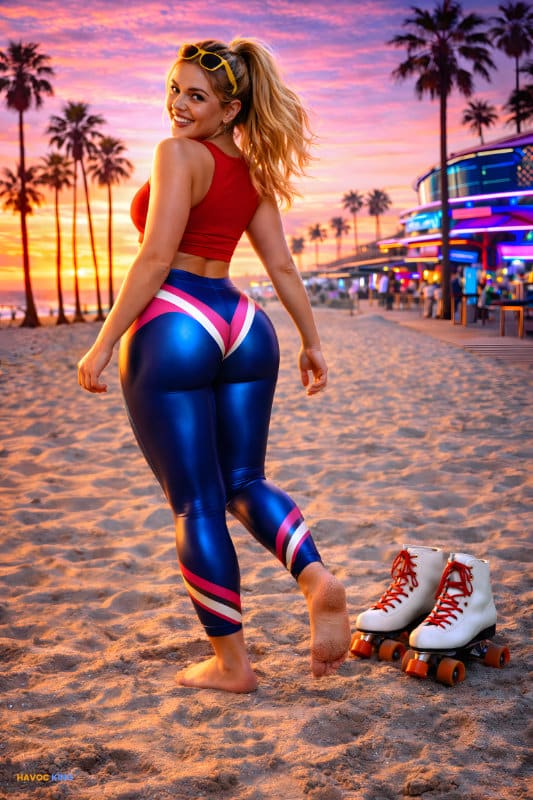
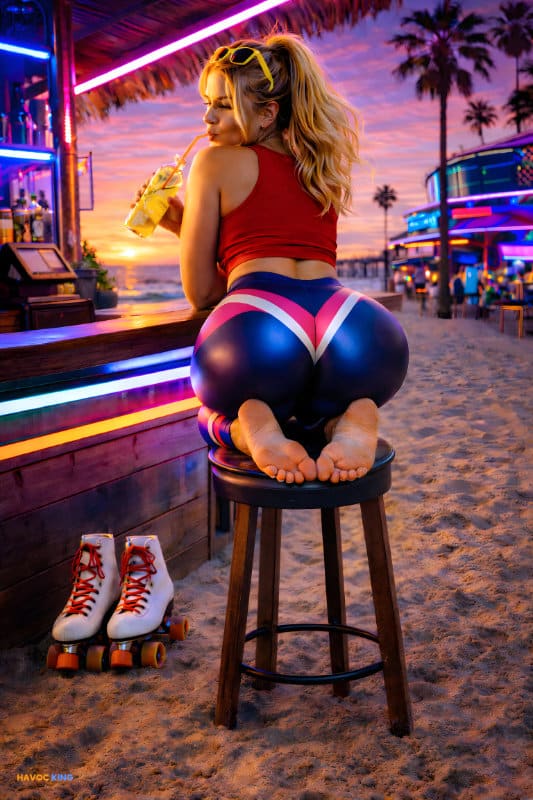
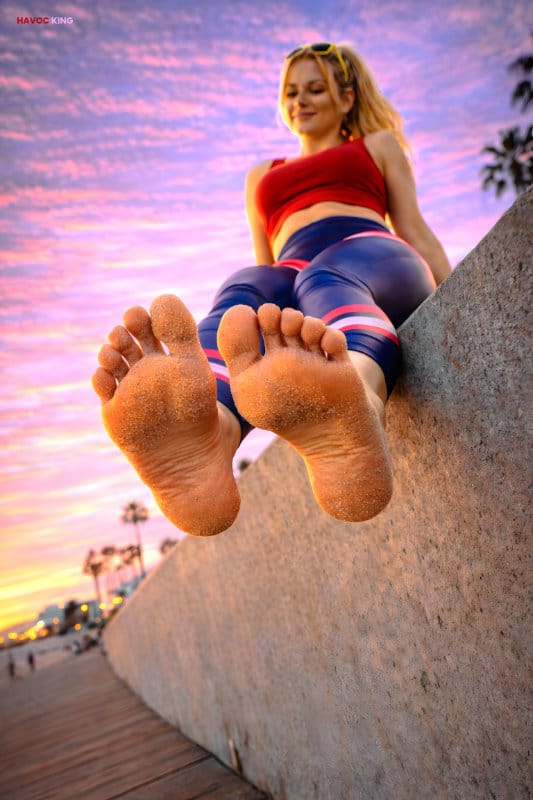
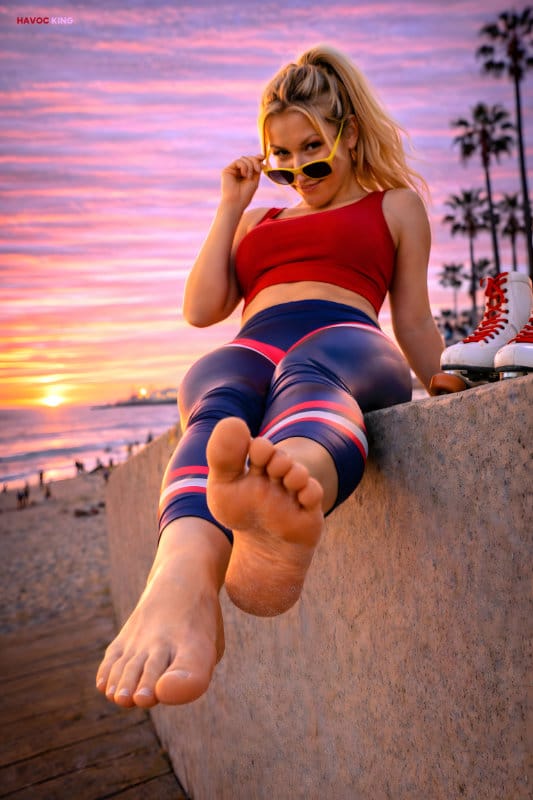
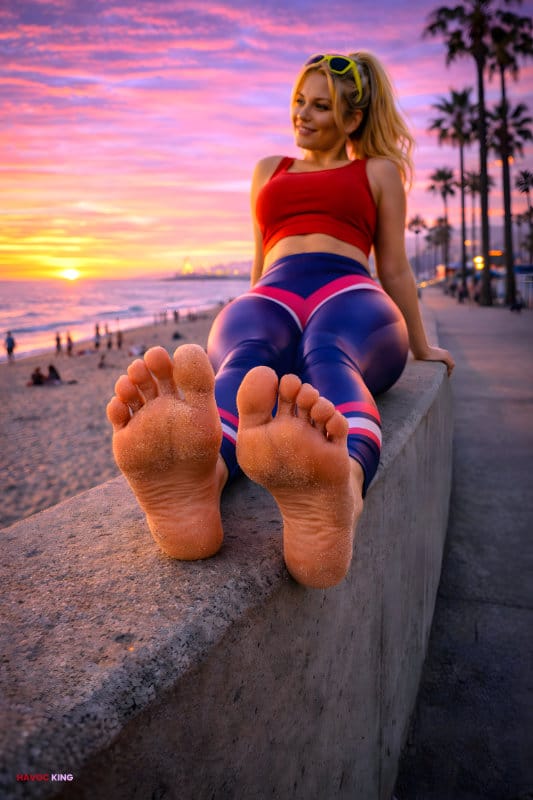
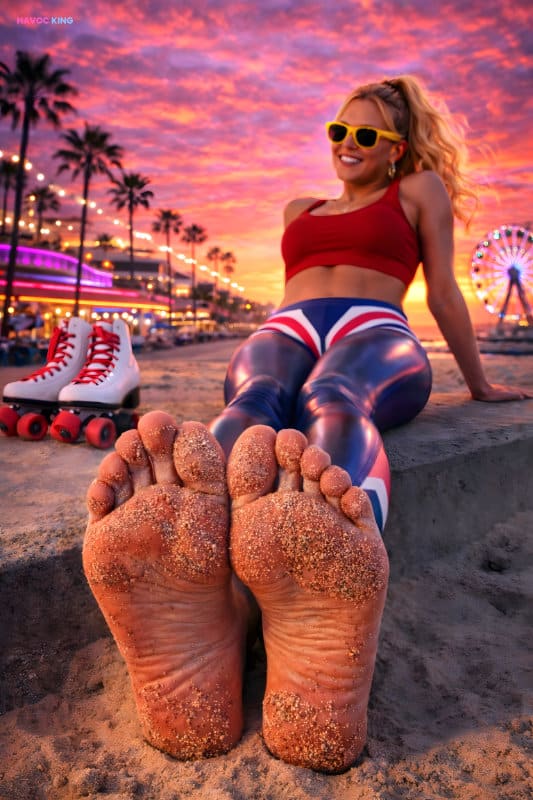
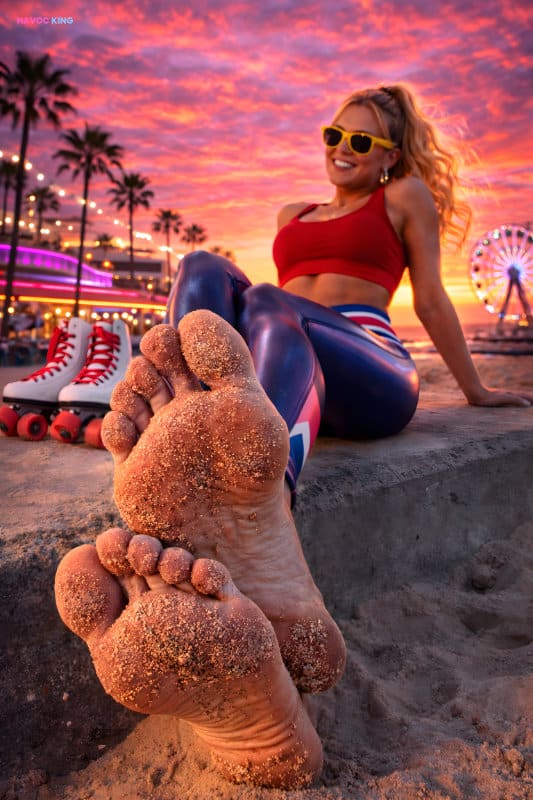
The seated beach images bring the foot-focused part of the series into view. Her skates are set aside, her sunglasses become part of the expression, and sand adds texture to the scene. These small details give the closer compositions a setting that makes sense.
Perspective does much of the work. The feet occupy the foreground while the figure and sunset remain visible behind them. A different angle can make the same situation feel casual, playful or more dramatic. The environment keeps those changes connected.
This is a familiar direction in my AI foot art: placing the central detail inside a wider composition. RollerGirl gives that approach a particularly clear starting point, because taking off the skates naturally changes both her posture and the focus of the image.
I discuss this relationship between close-up detail, recurring figures and their surroundings in Expanding Foot Fetish Art Through AI. Here, the beach becomes a practical example of how a setting can carry that idea across several images.
Returning to the Boogie Nights Influence
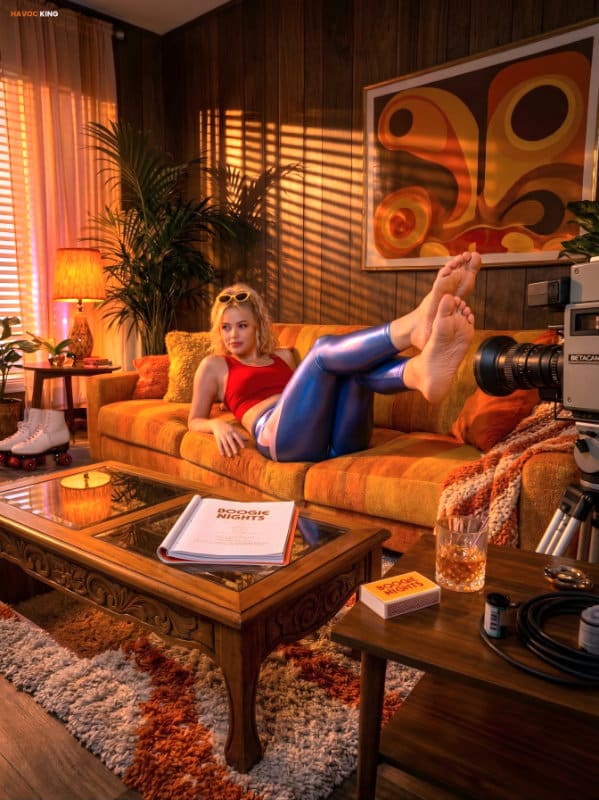
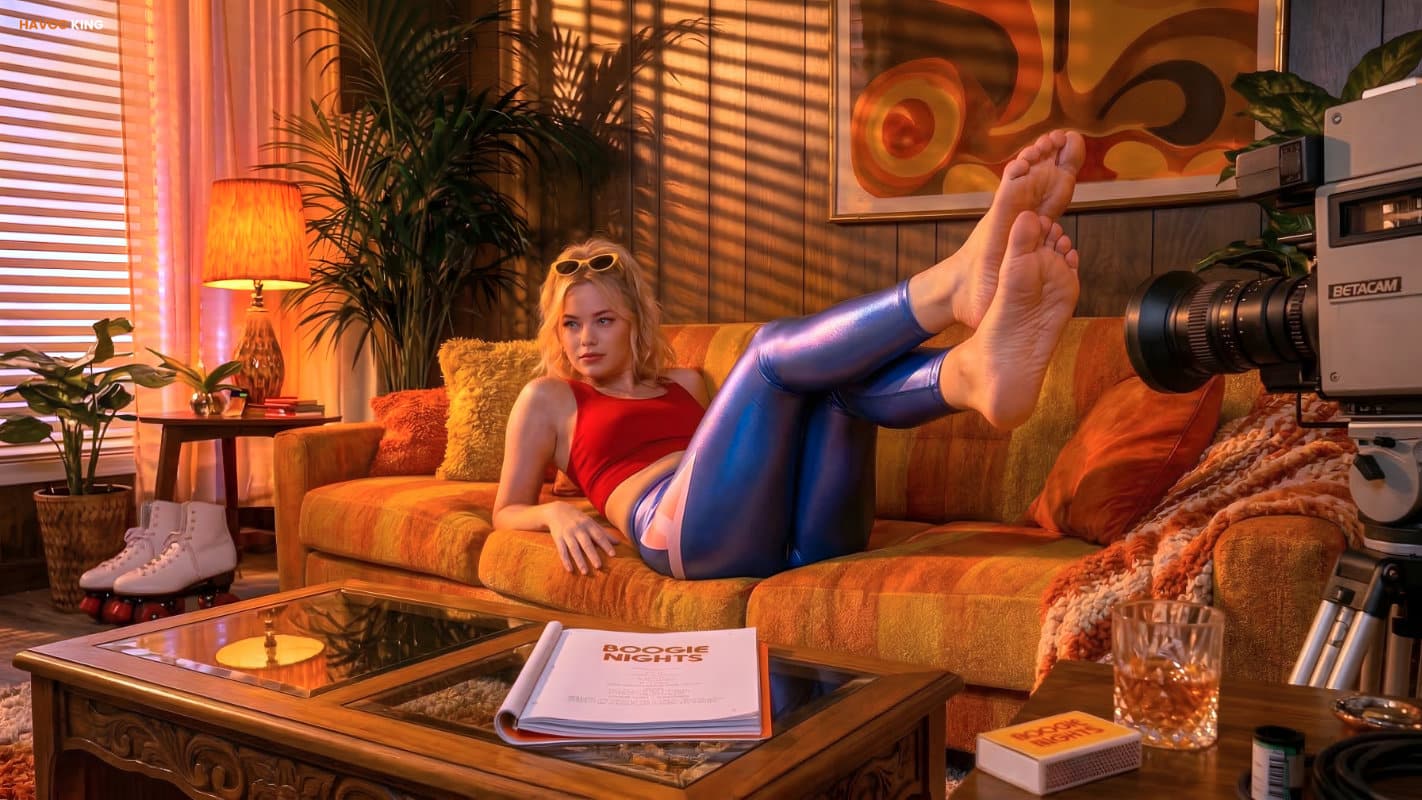
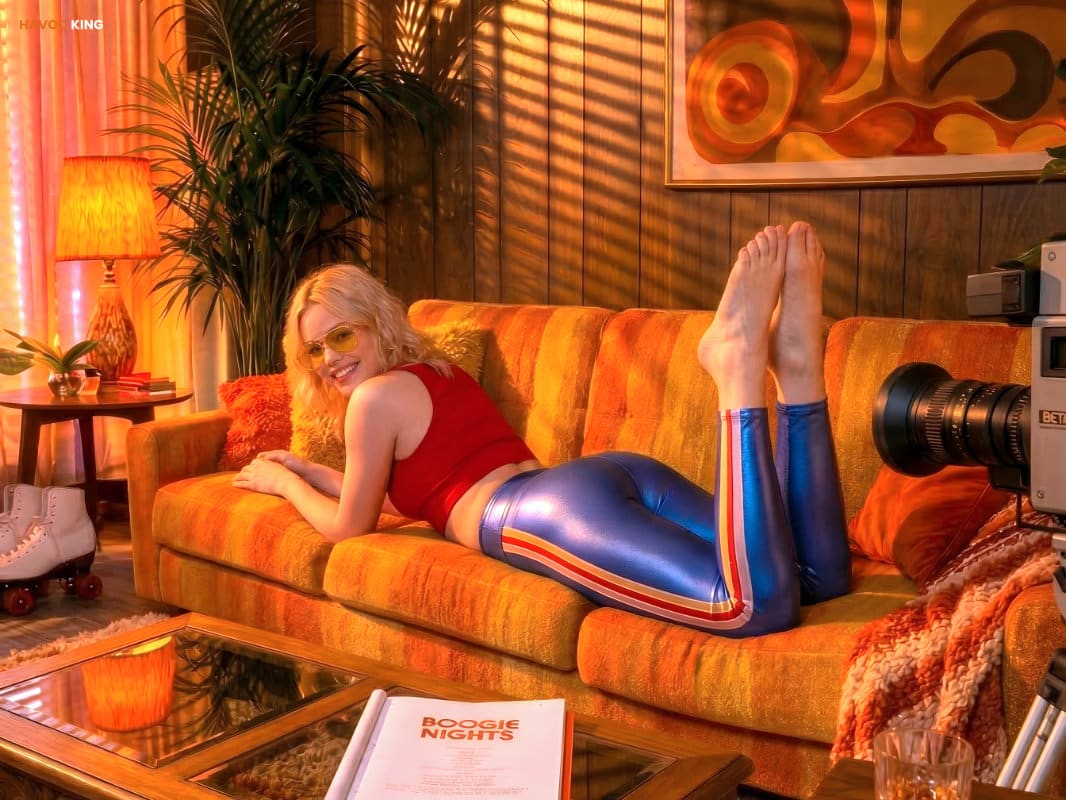
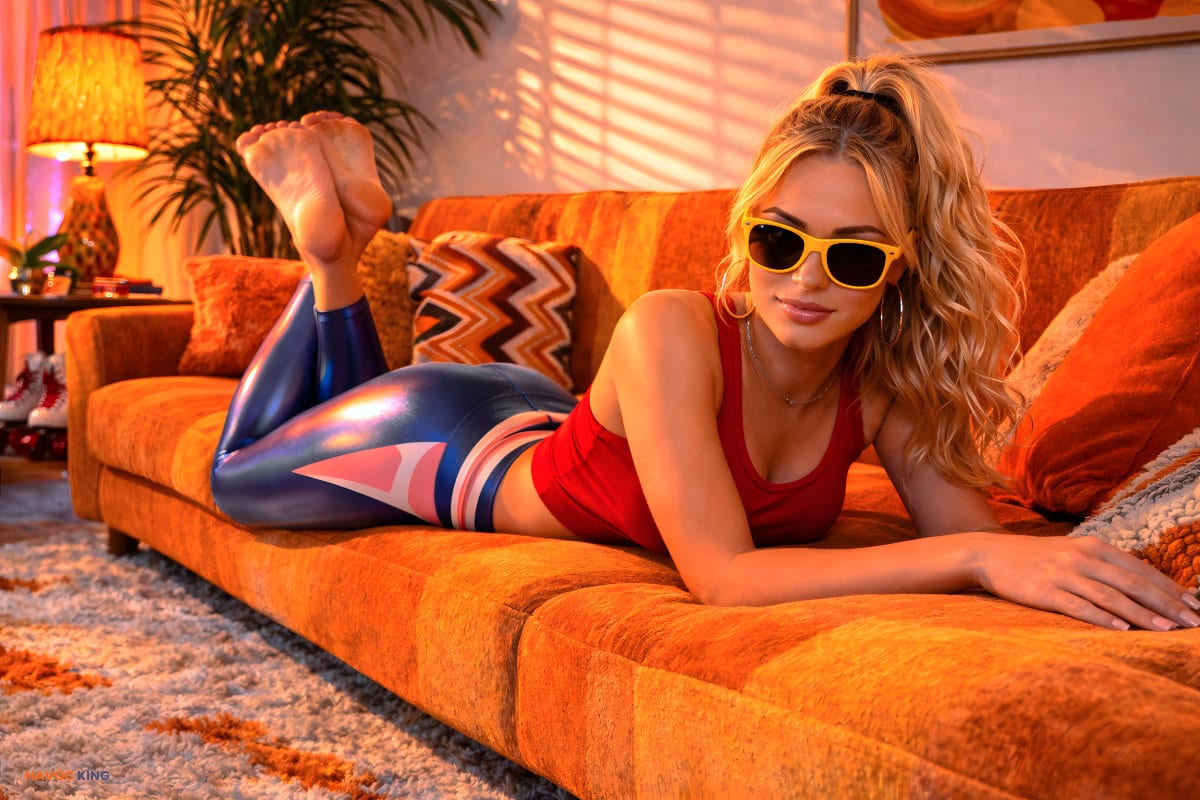
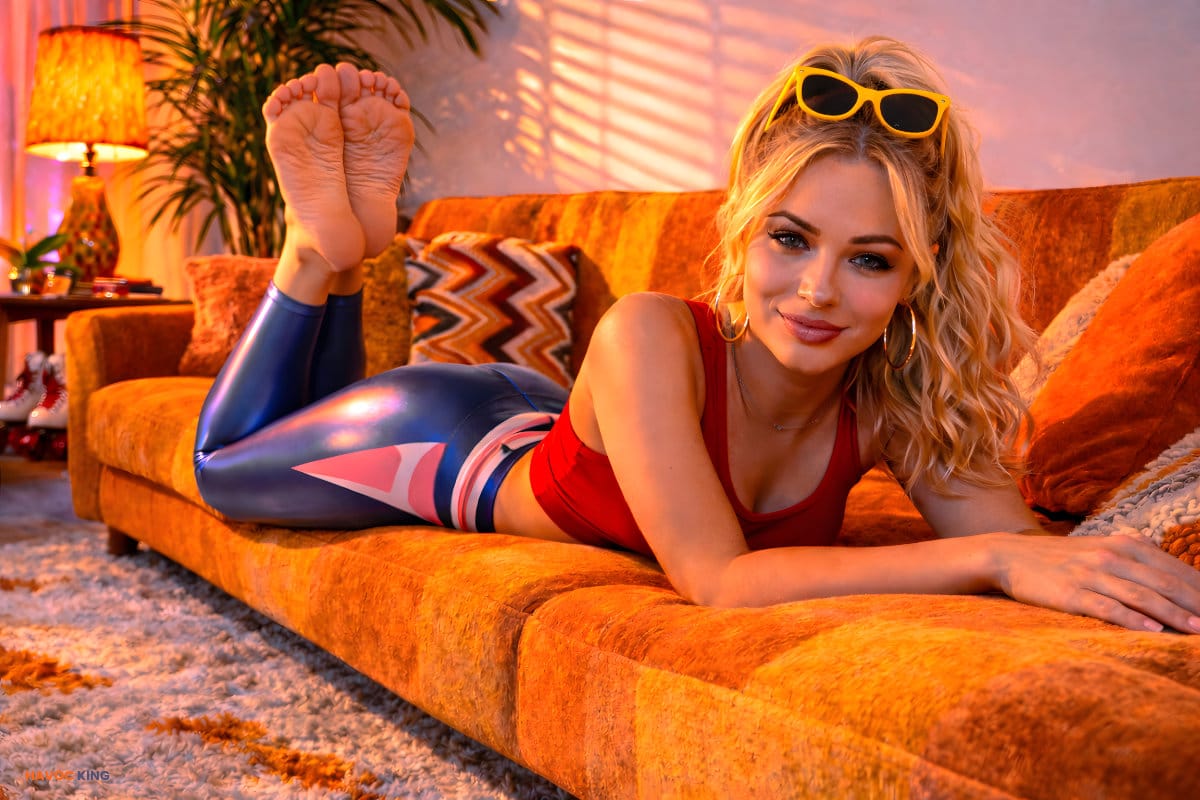
After exploring RollerGirl through the beach variations, I returned more consciously to the film connection. These images bring the original inspiration closer to the surface through a warm retro interior, orange furnishings and a more staged atmosphere.
This part of the series has a different rhythm. The outdoor pictures rely on movement and open space. The interior compositions use the furniture, the pose and the camera angle to hold attention within a smaller environment.
A Film Reference Becomes a Personal Interpretation
The relationship to Boogie Nights is useful context, but these are my AI-generated interpretations. They are not production stills or photographs of the film’s performer. The character in this series belongs to the visual direction I have developed from that influence.
Returning to the source also made the progression clearer to me. An idea that was initially present almost in the background became something I could address directly. The film-inspired images acknowledge where part of the fascination began, while keeping the colors, styling and foot-focused composition connected to the rest of my work.
From Roller Skates to Worn Flip Flops
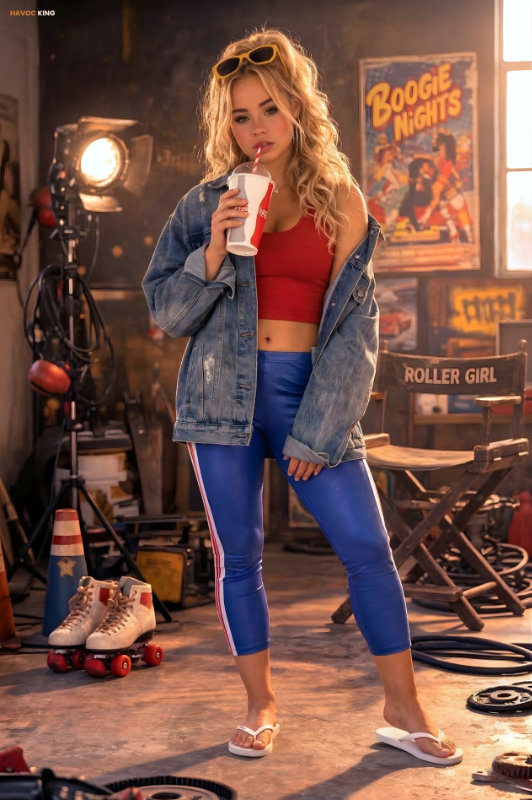
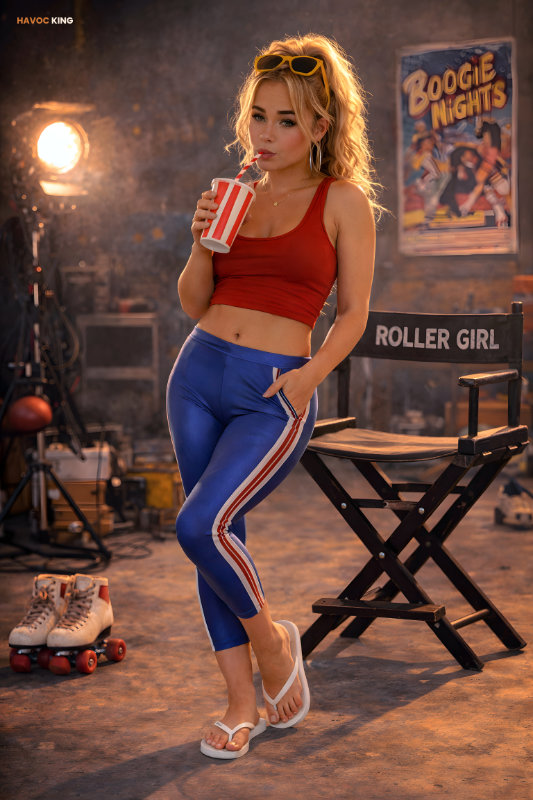
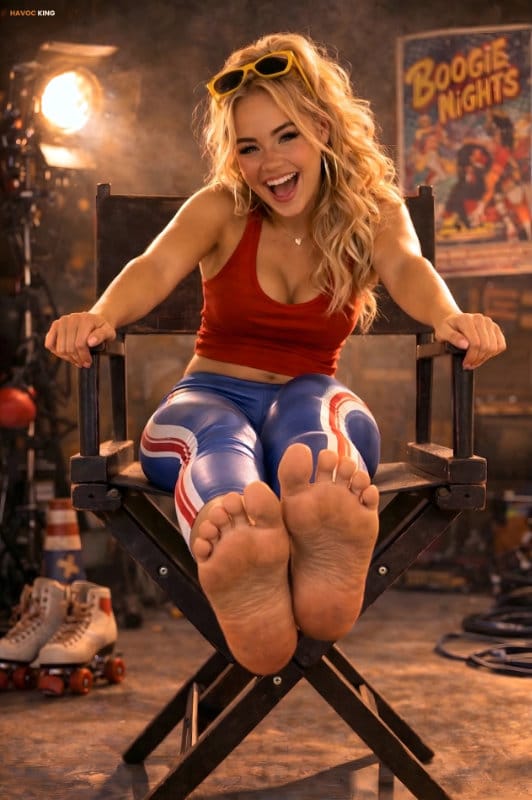
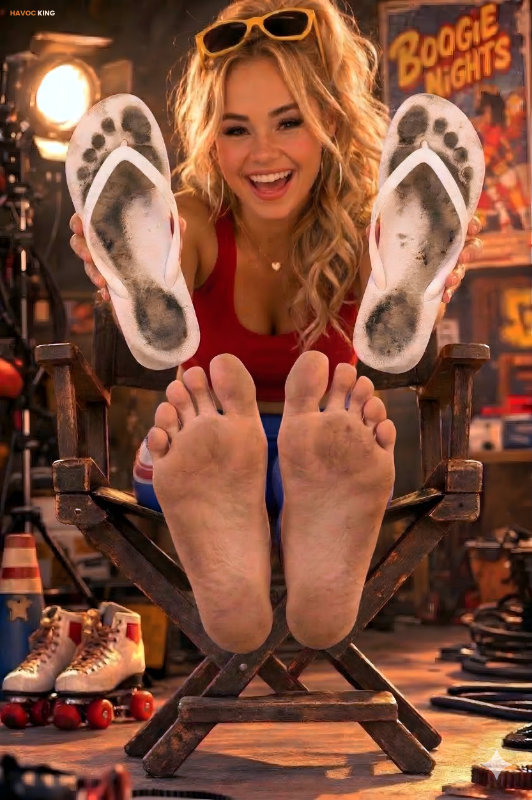
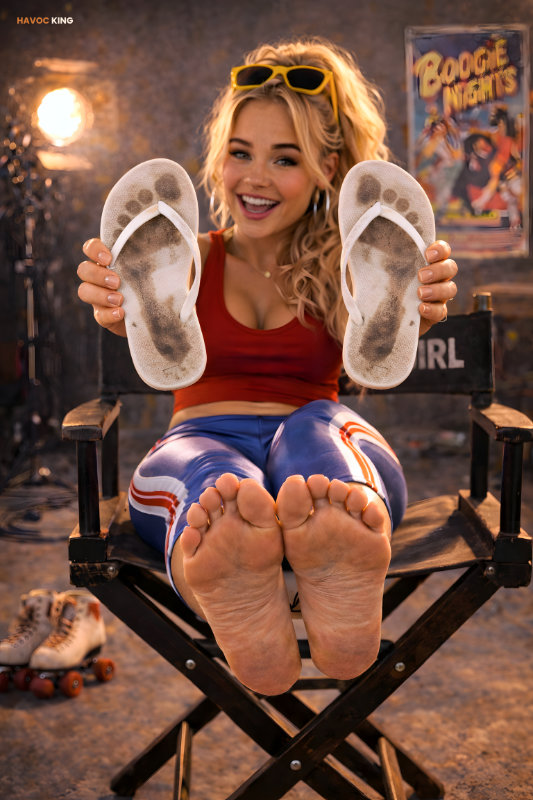
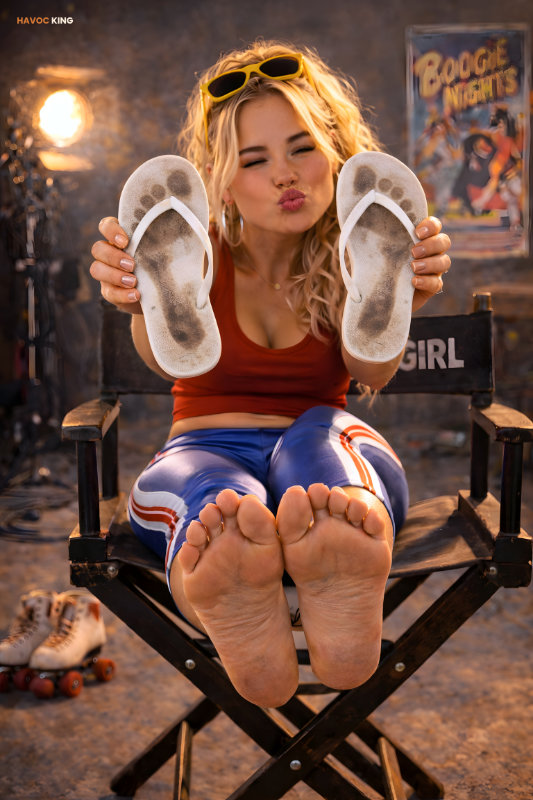
The studio variations take the character in another direction. The skates remain nearby, but she now wears or holds white flip-flops. A director’s chair, a drink and the studio lights give the images a playful setting of their own.
The used flip-flops are an important part of this development. Their visible wear introduces an everyday detail into a carefully constructed AI scene. Beside the cleaner surfaces of the outfit and the surrounding equipment, those marks provide texture and a sense of use.
Giving the Character More Personality
These pictures also make room for expression. A smile, a teasing face or a relaxed standing pose can change the mood without changing the character’s identity. The jacket and drink add further variation, while the red top and blue leggings maintain the connection to the earlier images.
For me, this is where RollerGirl becomes especially useful as a recurring figure. The series can move beyond skating while still referring back to it. Her footwear changes, the surroundings change, and the viewer can continue to recognize the same visual idea.
The director’s chair setting is an imagined studio scene, not documentation of the creation process. It lets the character play with the film reference while giving the final gallery its own mood.
Retro Inspiration and the Future of AI Art
RollerGirl brings an older cinematic influence into a contemporary digital art practice. The subject remains rooted in retro styling, while AI makes it possible to develop new interpretations across streets, beach settings and interiors.
That is the futuristic aspect that interests me here. It sits in the way an image can develop: a painted-looking beginning becomes the basis for a photorealistic character, and that character can then be explored through different environments and compositions. The futuristic element does not need to appear as science-fiction scenery.
The series also shows why visual continuity matters. The red top, blue leggings, retro footwear and recurring color choices help connect the galleries. Within that framework, I can change the pose, the mood and the emphasis without starting from nothing each time.
AI provides the means to explore those possibilities, but the direction still comes from the choices made around the image. Which details deserve to stay? Which variations add something? Where does the film influence help, and where should the character move further into my own work?
For RollerGirl, those questions began with one image I wanted to revisit. The resulting series follows that curiosity from neon movement to a beach pause and finally to a studio chair with a pair of worn #flipflops. Each setting gives her another way to exist within the Havoc King image world.